
On 4 February 2026, a major incident on London’s railway network caused widespread disruption during the morning rush hour, leading to cancellations, delays and travel chaos for thousands of commuters and travellers. The events centred around a train derailment at Selhurst depot in south-east London, which — while thankfully not resulting in injuries — had a ripple effect across multiple major rail services.
What Happened?
In the early hours of the day, a passenger train derailed inside the Selhurst depot, a major hub for services operated by Govia Thameslink Railway (GTR) — one of the UK’s largest rail franchises. Although the derailed train stayed upright and no passengers were hurt, it blocked critical access routes out of the depot.
Almost simultaneously, a signalling fault was reported between London Blackfriars and Norwood Junction, further reducing available track capacity for trains in the area.
Due to these two issues — the derailment itself and the signal failure — operators issued an early-morning “do not travel” alert which lasted several hours as engineers worked to resolve the problem.
The Causes — Explained
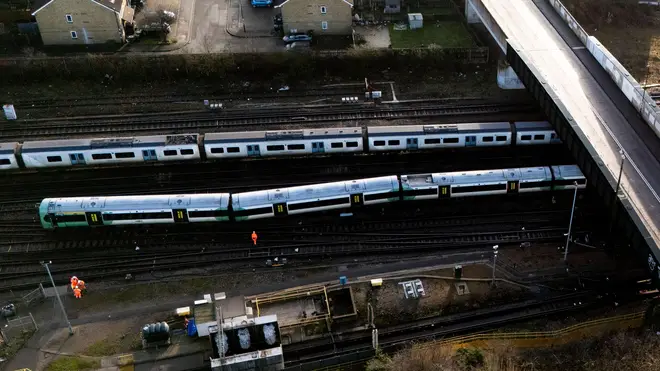
To understand why the derailment caused such disruption, let’s break down the factors involved:
1. Derailment Inside a Depot
Most train derailments you hear about involve trains leaving the main line — but in this case, the incident happened inside a rail depot used to house and dispatch trains. That matters because:
- Depots are critical gateways for trains entering service.
- A blockage here doesn’t just affect one train — it prevents others from leaving, compounding disruption.
The specific cause of the derailment inside the depot hasn’t yet been publicly confirmed, and in many such cases, investigators look at things like:
- Track condition and alignment
- Points (switches) failure
- Rolling stock wheel or brake issues
- Debris or foreign objects on the track
Detailed investigations by bodies like the Rail Accidents Investigation Branch (RAIB) often take weeks to complete, so an official cause may be released later.
In depot derailments, even a minor misalignment or fault in track equipment can cause a wheelset to lift off the rails — especially at points where tracks split. This doesn’t usually lead to injuries, but it can block operational routes.
2. Signalling Fault Between Key Stations
Railway signalling systems act like the nervous system of the rail network — they ensure trains run safely at the right times and on the right lines.
On the same morning, a major signalling issue was reported between London Blackfriars and Norwood Junction. This section of line is vital for Thameslink, Southern and Gatwick Express services.
When signalling fails:
- Trains must slow down or stop entirely
- Tracks that would normally handle a high volume of services become restricted
- Traffic jams can form quickly on the network
Even after the initial warning was lifted, this fault continued to disrupt services because engineers needed time to fully secure and reset the system.
Why the Impact Was So Big
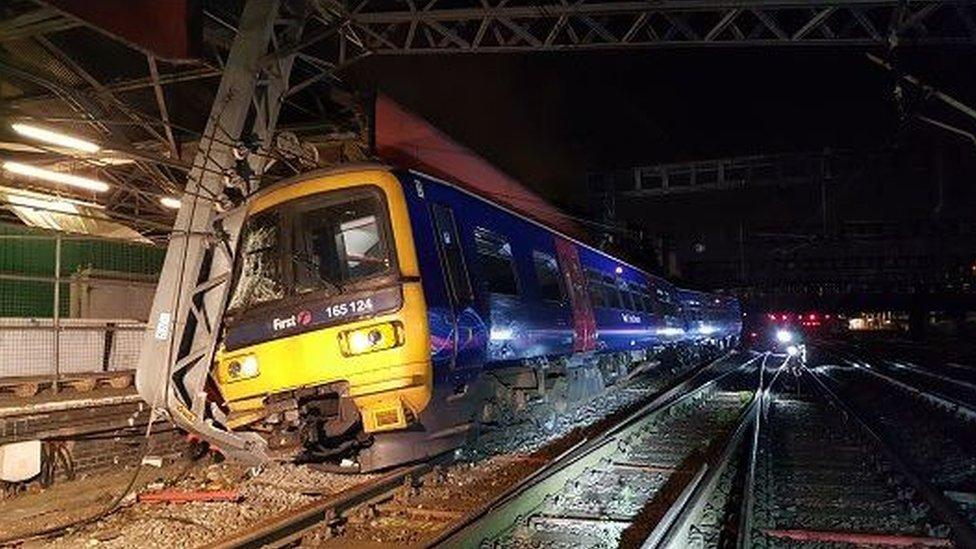
You might be wondering: “Why did one train derailment cause chaos across London?” — and the answer is a combination of key factors:
Network Interconnectivity
London’s rail network is tightly interlinked — so a blockage in one place can affect trains many miles away. The fact that the derailment happened inside a depot meant:
- Trains couldn’t leave to start their journeys
- Timetables quickly fell apart
- Alternatives (buses, taxis) were needed for many passengers
Peak Travel Time
The incident occurred during the weekday morning peak, when thousands of commuters typically travel. Even a short blockage can cause cascade delays across the system.
Compounding Technical Faults
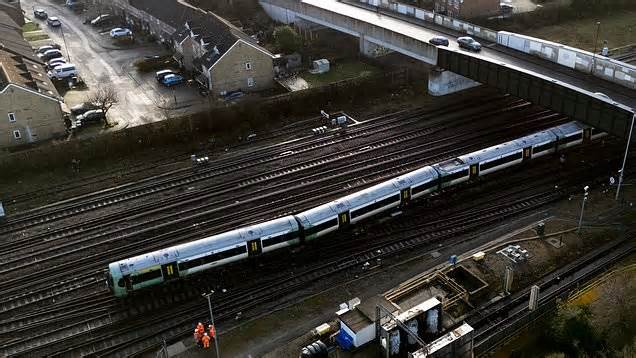
The signalling fault added another layer of disruption — meaning trains had fewer tracks to use and had to operate at reduced speeds or be cancelled altogether.
Response Efforts
Officials from GTR and Network Rail were on site quickly to:
- Assess and clear the derailed train
- Work on the signalling issues
- Update passengers via social media and station announcements
Passengers were advised to:
- Check live travel information before travelling
- Use alternative transport where possible
- Allow plenty of extra time for journeys
What Comes Next?
Incidents like this typically lead to:
Investigation
A formal investigation will look into:
- The exact mechanical and operational cause of the derailment
- Whether infrastructure faults contributed
- Ways to prevent similar situations in the future
Infrastructure Investment
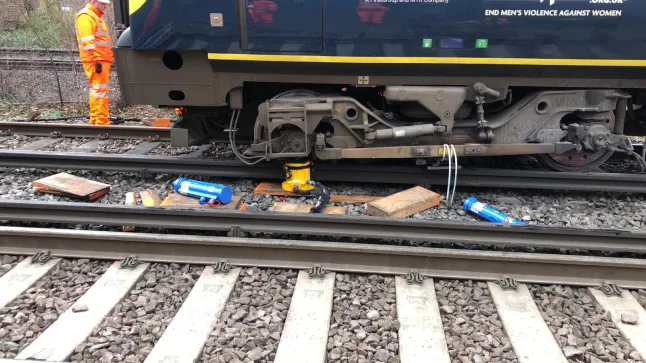
Rail networks regularly review signalling, track condition and depot layouts to ensure resilience against disruptions — and high-profile incidents like this often accelerate upgrades.
Key Takeaways
Here’s a quick summary of the main points:
- A train derailed at Selhurst depot in south-east London, blocking the depot exit.
- A signalling fault between Blackfriars and Norwood Junction compounded disruption.
- No injuries were reported, but services were cancelled, delayed or revised across major routes.
- The disruption was particularly severe because of network connectivity and peak travel demand.
Final Thought
Rail systems are complex ecosystems — and when several issues hit at once, even relatively small faults can cascade into major travel chaos. Incidents like this highlight the importance of robust infrastructure, real-time communication, and rapid response efforts by train operators and engineers.
#LondonTrainDerailment #TrainDerailment #LondonNews #UKRail #RailwayUpdate #BreakingNews #TravelDisruption #PublicTransport #UKTransport #NetworkRail #Thameslink #GatwickExpress #RailSafety #Carrerbook #Anslation